Software Development
RAPID
An application to create conceptual feasibility maps for various types of energy projects
Summary:
Development and Launch of RAPID Application: Played a crucial role in steering the RAPID project from its inception to launch, integrating Leaflet with ArcGIS Online to create a user-friendly and dynamic mapping experience.
Enhanced Accessibility and Effectiveness: The integration significantly improved the application's accessibility and effectiveness, enabling real-time interaction with geographic data and supporting the visualization needs of users.
Business Development and Operational Utility: RAPID serves dual purposes by assisting in early project information capture and facilitating the siting of energy facilities through a constraint mapping and generative application approach, aiming to revolutionize project planning in the energy sector.
Technical Infrastructure and Development Strategy: Utilized Infrastructure as Code with Bicep for automated deployment, outlined a clear architectural blueprint, and led the development process through agile methodology, ensuring alignment with user requirements and project objectives.
Collaborative Leadership and Technical Innovation: Led a multidisciplinary team and managed the development of a robust SQL database and FME flow workspaces, which were critical for the application's data management and automated data transformation, setting a new standard in environmental consulting and GIS applications.
Detailed Project Description:
In the development of the RAPID application, a project that marked a significant milestone in our approach to environmental consulting and GIS applications, I played a crucial role in steering the project from its conceptualization to its successful launch. At the heart of RAPID’s innovation was the seamless integration of Leaflet with ArcGIS Online (AGOL), enabling an intuitive and dynamic mapping experience that was both user-friendly and powerful in its capabilities. This integration was pivotal in enhancing the application’s accessibility and effectiveness, allowing users to visualize and interact with geographic data in real-time.
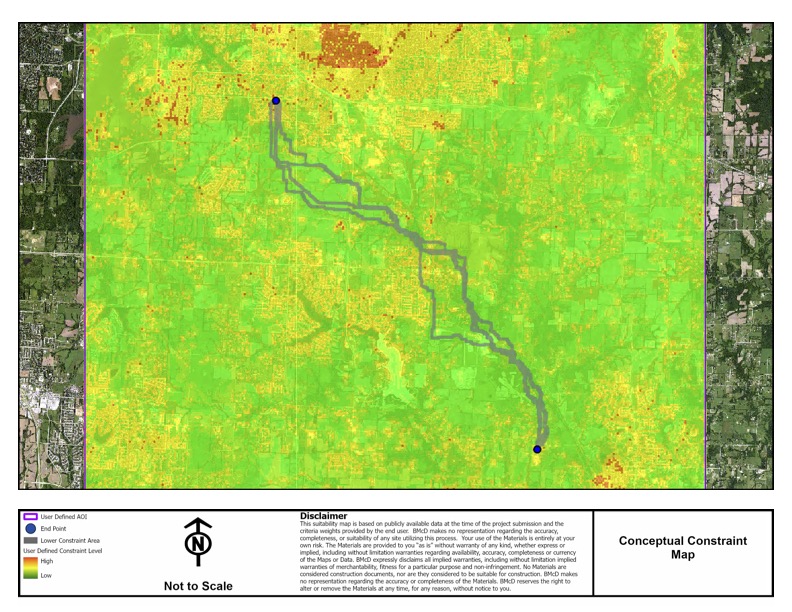
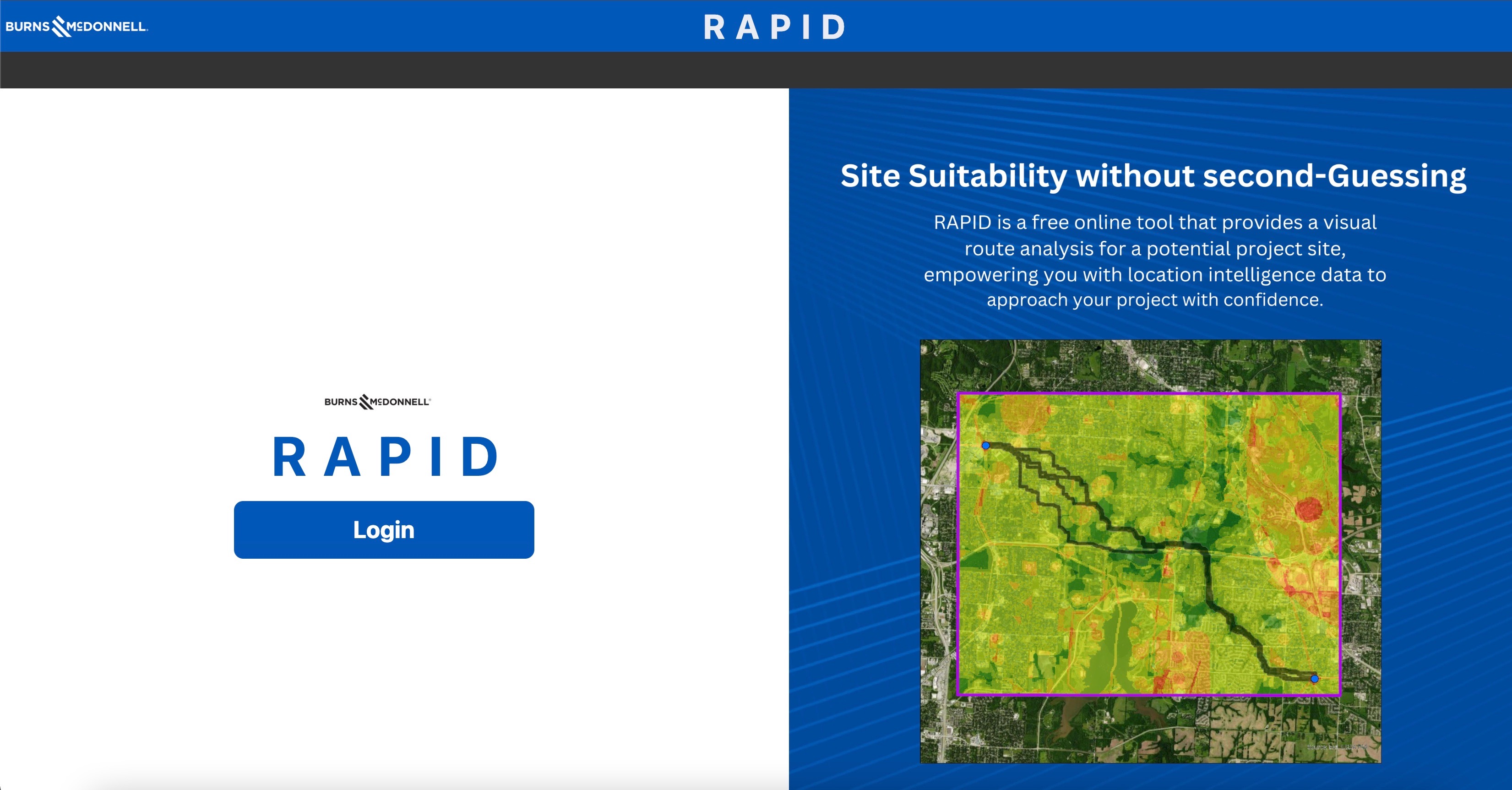
The project ambitiously aimed to serve both internal operational needs and external business development goals. The external version of the application is available at https://ens-rapid-prod.azurewebsites.net/Login and is designed as a business development application to assist in capturing early project information. This facet of RAPID allows end users to rank approximately 30 different constraints critical to the siting of various energy facilities. The application then generates a conceptual constraint map along with potential corridors for linear infrastructure, embodying the first step towards a full AI Generative routing study. I firmly believe these generative applications will revolutionize the competitive energy sectors, such as renewables development and FERC 1000 projects, as well as traditional energy sectors, marking a new era of efficiency and precision in project planning and execution.
The foundation of the project was laid with Infrastructure as Code (IaC) using Bicep, a strategic choice that facilitated the automated deployment of Azure environments in a reliable and scalable manner. This approach not only optimized our development process but also ensured consistency across our deployment stages, embodying our commitment to leveraging the latest in cloud technology. The creation of the design document was another critical phase, where we outlined the architectural blueprint and operational logic of the RAPID application, ensuring all stakeholders were aligned with the project's objectives and technical specifications.
My responsibilities extended to the development and evaluation of the Request for Proposal (RFP), a process that demanded a keen understanding of our project needs and the capabilities of potential vendors. Documenting the key aspects of the Minimum Viable Product (MVP) and translating these into actionable user stories was instrumental in guiding the development process, ensuring that the RAPID application was both functional and aligned with user requirements from the outset.
Leading a team of developers through the agile methodology, I fostered an environment of continuous improvement and collaboration, enabling us to adapt swiftly to challenges and feedback throughout the development cycle. My role also involved spearheading a multidisciplinary team of internal resources, including legal, IT, marketing, insurance, and InfoSec, ensuring that every facet of the project was executed with excellence and compliance.
The technical development of the RAPID application included the design of a robust SQL database schema, a foundation upon which the application's data management and retrieval capabilities were built. In parallel, the development of FME flow workspaces was critical in automating data transformation and integration processes, further enhancing the application’s efficiency and the value it delivered to users. Through these concerted efforts, the RAPID application emerged as a testament to innovative thinking, technical expertise, and collaborative spirit, setting a new benchmark in environmental consulting and GIS applications.
Detailed Project Description:
In the development of the RAPID application, a project that marked a significant milestone in our approach to environmental consulting and GIS applications, I played a crucial role in steering the project from its conceptualization to its successful launch. At the heart of RAPID’s innovation was the seamless integration of Leaflet with ArcGIS Online (AGOL), enabling an intuitive and dynamic mapping experience that was both user-friendly and powerful in its capabilities. This integration was pivotal in enhancing the application’s accessibility and effectiveness, allowing users to visualize and interact with geographic data in real-time.
The project ambitiously aimed to serve both internal operational needs and external business development goals. The external version of the application is available at https://ens-rapid-prod.azurewebsites.net/Login and is designed as a business development application to assist in capturing early project information. This facet of RAPID allows end users to rank approximately 30 different constraints critical to the siting of various energy facilities. The application then generates a conceptual constraint map along with potential corridors for linear infrastructure, embodying the first step towards a full AI Generative routing study. I firmly believe these generative applications will revolutionize the competitive energy sectors, such as renewables development and FERC 1000 projects, as well as traditional energy sectors, marking a new era of efficiency and precision in project planning and execution.
The foundation of the project was laid with Infrastructure as Code (IaC) using Bicep, a strategic choice that facilitated the automated deployment of Azure environments in a reliable and scalable manner. This approach not only optimized our development process but also ensured consistency across our deployment stages, embodying our commitment to leveraging the latest in cloud technology. The creation of the design document was another critical phase, where we outlined the architectural blueprint and operational logic of the RAPID application, ensuring all stakeholders were aligned with the project's objectives and technical specifications.
My responsibilities extended to the development and evaluation of the Request for Proposal (RFP), a process that demanded a keen understanding of our project needs and the capabilities of potential vendors. Documenting the key aspects of the Minimum Viable Product (MVP) and translating these into actionable user stories was instrumental in guiding the development process, ensuring that the RAPID application was both functional and aligned with user requirements from the outset.
Leading a team of developers through the agile methodology, I fostered an environment of continuous improvement and collaboration, enabling us to adapt swiftly to challenges and feedback throughout the development cycle. My role also involved spearheading a multidisciplinary team of internal resources, including legal, IT, marketing, insurance, and InfoSec, ensuring that every facet of the project was executed with excellence and compliance.
The technical development of the RAPID application included the design of a robust SQL database schema, a foundation upon which the application's data management and retrieval capabilities were built. In parallel, the development of FME flow workspaces was critical in automating data transformation and integration processes, further enhancing the application’s efficiency and the value it delivered to users. Through these concerted efforts, the RAPID application emerged as a testament to innovative thinking, technical expertise, and collaborative spirit, setting a new benchmark in environmental consulting and GIS applications.
Next
FME Flow
FAA Airspace Modeling
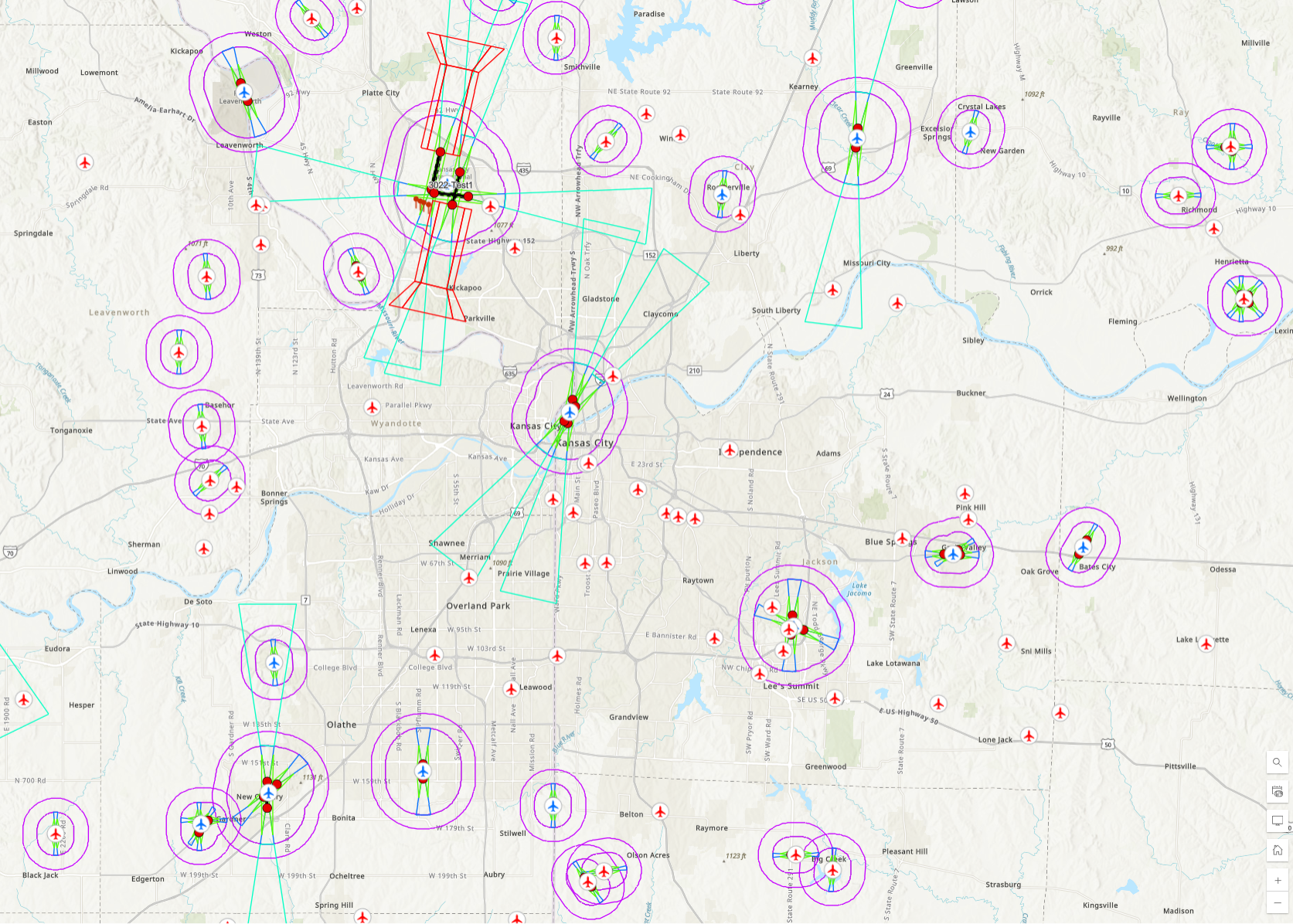
Utilizing data from the FAA, airspace protection surfaces are modeled and made available to project teams.